StoryLocal news
CFTC Rule at the White House Grew From a Proposal Expecting Sports Contracts New Jersey Disputes to Pass
The final rule reached the Office of Management and Budget on November 20, 2026, and its June proposal expected most sports contracts to pass, against the position New Jersey and 40 other attorneys general took, while citing the state's Third Circuit loss three times.
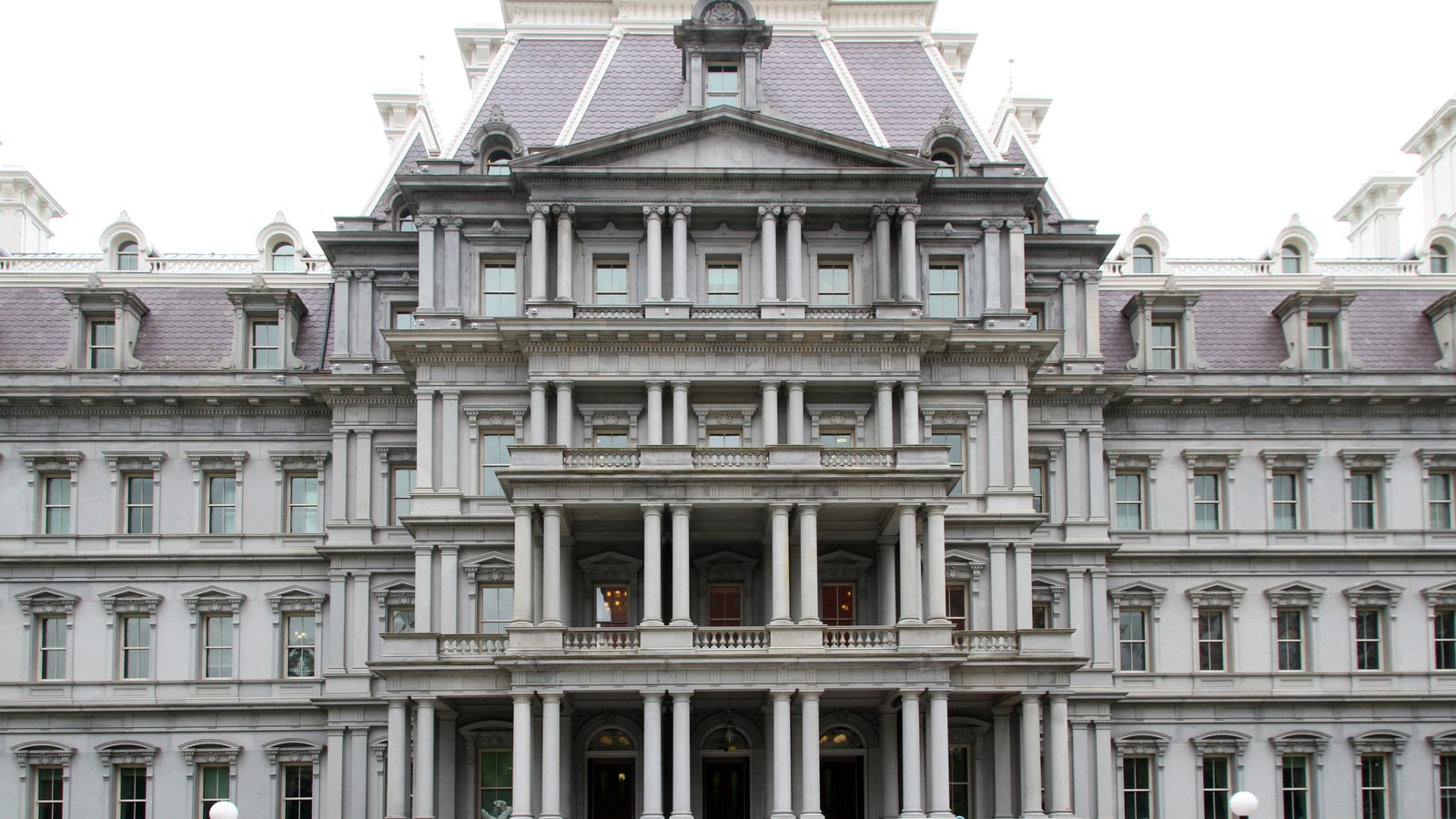
The CFTC prediction market rule now under White House review grew out of a proposal that took New Jersey's own defeat in federal court as support, set aside a gambling-centered reading of the word "gaming," and expected most sports contracts to pass the agency's public-interest test. The federal government's public list of rules under review, as it stood on November 23, 2026, shows the Commodity Futures Trading Commission's final rule "Prediction Markets; Public Interest Determinations" received by the Office of Management and Budget on November 20, 2026, at the final-rule stage and pending review. The text of the final rule has not been released, and nothing about its contents is known from the public record.
What is on the record is the rulemaking New Jersey helped shape. The rule carries the regulation identifier RIN 3038-AF65, the same number as the advance notice the CFTC published on March 16, 2026, and on April 30, 2026 New Jersey joined Ohio, Nevada, New York, Tennessee, Utah, 34 other states and the District of Columbia in a comment letter on that notice telling the agency that sports event contracts are sports betting and belong to the states. The June 12, 2026 proposal that followed counted sports as gaming but expected most sports contracts to pass its public-interest factors, asserted the CFTC's exclusive jurisdiction, and cited the Third Circuit's decision in New Jersey's case against Kalshi three times in doing so.
What the White House is reviewing
The listing gives the rule's title, its agency, the date the Office of Management and Budget received it and its status, and nothing more: no text, no summary and no date for publication. It marks the action as not economically significant and as one issued under the Dodd-Frank Act. Two other CFTC actions on event contracts sat on the same list on November 23: a final rule titled "Data Reporting Requirements for Certain Event Contracts," received on October 20, 2026, and a proposed rule titled "Regulation Customer Protection and Identification," received on November 2, 2026. The Federal Register's own index for RIN 3038-AF65 listed two documents on November 23, the March advance notice and the June proposal, and no final rule.
Bloomberg, in a November 23 report by Lydia Beyoud, said the June proposal drew about 1,400 comments and that a CFTC spokesperson declined to comment. The same report said it is "not clear how a final rule will factor into ongoing litigation." For New Jersey, that litigation is a case the state has already taken to the Supreme Court.
What New Jersey asked the CFTC for in April
The April 30, 2026 letter, addressed to CFTC Chairman Michael S. Selig and filed in Docket No. 2026-05105, makes one argument from its first page: sports betting through event contracts "is indistinguishable from traditional sports betting," and the Commission "should acknowledge it lacks any jurisdiction over such contracts" and confirm that in a rule. It is the letter's own heading and its own request, and New Jersey is the third state named on it.
New Jersey's law is the letter's worked example. "Take New Jersey as an example," it says, before walking through the state's licensing requirement, its posted resources for problem gamblers, its ban on wagers by athletes, referees, coaches and team owners under N.J.S.A. 5:12A-11(f), its 21-and-over rule, and the constitutional amendment barring wagers on college events played in New Jersey or involving a New Jersey college team. The letter also quotes the state's definition of a sports pool in N.J.S.A. 5:12A-10, which reaches "exchange wagering" by name.
The provision at the center of New Jersey's fight with Kalshi sits in the same statute. N.J.S.A. 5:12A-11(c), as the Legislature published it on November 23, 2026, says no sports pool or online sports pool "shall be offered or made available for wagering to the public by any entity other than a sports wagering licensee," and makes offering one without approval a crime of the fourth degree. That is the section the Division of Gaming Enforcement cited on March 27, 2025, when it demanded that Kalshi stop offering sports wagering to New Jersey residents. The Division's letter went further on college sports, citing the constitution's bar on wagering "on a college sport or athletic event that takes place in New Jersey," and told the exchange it was "engaging in activity that is unlawful under not only New Jersey law, but New Jersey's Constitution."
How the June proposal answered New Jersey's reading
The proposal, published at 91 FR 35806 on June 12, 2026 and open for comment until July 27, 2026, took up the states' central question directly. It reported about 3,500 comments on the advance notice, about 300 of them detailed, from groups that included state governments and tribal governments.
On the word that matters most in New Jersey, the proposal wrote its own definition of "gaming" for the CFTC's special rule on event contracts: any activity that participants typically engage in for recreation or to entertain others, that is governed by rules, and whose measurable outcomes depend on "the participants' luck, skill, or athletic ability." Sports fall inside that definition. What the proposal rejected was a definition built on betting itself: "a wagering- or gambling-centered definition of gaming is overbroad," it said, because every event contract stakes money on an uncertain outcome, and a gambling test would sweep in all of them. The examples it cites for the gambling-based view are letters from Kalshi, Better Markets and an individual commenter; the states' letter is not cited at that point.
Then it sorted sports contracts. Contracts on the aggregate outcomes of "professional or collegiate sports events," settled on objective data by an exchange that runs surveillance and works with the sport's governing body, were described as "unlikely to be found to be contrary to the public interest." Contracts settling only on a player's injury or on an official's call were described as likely to fail, and contracts on games of pure chance as highly likely to fail. For a reader in New Jersey the college line stands out: college games played here are the contracts the Division singled out in its 2025 letter as barred by the state constitution, and the proposal named collegiate events among the contracts it expected to pass.
The proposal also changed how state law enters the analysis. One category the CFTC may bar is a contract involving "activity that is unlawful under any Federal or State law," and the proposal reads that to ask whether the event a contract settles on is itself unlawful, not whether trading the contract would be. It says plainly that the Commission's 2023 reasoning that election betting is unlawful in many states "was incorrect." The Division's letter used nearly the statute's words, calling Kalshi's conduct "activity that is unlawful" under New Jersey law, but its target was the wager: the Sports Wagering Act governs who may offer a sports pool, not whether a game may be played, and the constitutional bar is on "wagering" on the college game. The proposal also says its definition of gaming "does not purport to interpret or displace" any other federal or state law using the term, so the definition by its own words leaves New Jersey's statutes as written.
New Jersey's own case runs through the proposal's account of federal power. Its first footnote on the CFTC's jurisdiction quotes the Third Circuit in KalshiEX, LLC v. Flaherty, 172 F.4th 220, that Congress sought "to do away with the patchwork of state regulations," and two later footnotes cite the same opinion on the agency's exclusive jurisdiction. That is the April 6, 2026 decision New Jersey has asked the Supreme Court to review.
Where New Jersey's own case stands
The order in force is the District of New Jersey's of April 28, 2025, which enjoins the state's gaming regulators and its Attorney General "from pursuing civil or criminal enforcement actions against Kalshi concerning its sports-related event contracts." The Third Circuit affirmed it in No. 25-1922 on April 6, 2026, Judge Porter writing and Judge Roth dissenting. The district court case, No. 1:25-cv-02152, has been stayed since May 19, 2026 pending the Supreme Court's decision on certiorari, and the court's docket shows no entry after June 16, 2026.
The state's petition, Flaherty v. KalshiEX, LLC, No. 26-299, was filed on September 2, 2026 and docketed on September 8. As of November 23, 2026, the Supreme Court's docket listed no entry after October 30, when the Court extended Kalshi's time to respond to December 7, 2026. Counsel of record for the petitioners is Sundeep Subramanian Iyer of the Office of the New Jersey Attorney General; for Kalshi, Paul D. Clement of Clement & Murphy, PLLC.
A CFTC rule does not decide a federal case, and no part of the record says how the justices or the lower courts would weigh one. What a final rule changes is the agency's written position. If it keeps the June proposal's reading, the federal regulator will have adopted in a binding rule the view of gaming that New Jersey and 40 other attorneys general argued against, while the state's petition asks the Court whether Congress took sports wagering away from the states at all. If the final rule moves toward the states' view, that changes the record the other way. Neither is known until the text is published. The site's November 6 story on the CFTC's geoblocking guidance set out the agency's last move against this same New Jersey record.
What happens next
The next fixed date in New Jersey's case is December 7, 2026, when Kalshi's response to the petition is due, as the site's story on the extension reported. The friend-of-the-court briefs filed between September 22 and October 8, 2026, from Ohio and other states, the National Football League, the Casino Association of New Jersey and others, are set out in the site's October story on the amicus filings.
The rule has no fixed date. The listing gives none for the end of review, and the CFTC has not said when it will publish. Under the June proposal, the amendments would take effect 60 days after a final rule appears in the Federal Register; whether the final version keeps that timing is unknown until it is published. The full set of filings, orders and federal actions affecting prediction markets in this state, each with its date, is on the New Jersey legal status page, and the exchange's own record is on the Kalshi in New Jersey page.
Questions readers are asking
What CFTC prediction market rule is the White House reviewing?
The CFTC's final rule Prediction Markets; Public Interest Determinations, RIN 3038-AF65, which the Office of Management and Budget received on November 20, 2026 and listed as pending review on November 23, 2026. Its text has not been released.
Did New Jersey comment on the CFTC's prediction market rulemaking?
Yes. New Jersey is the third state named on an April 30, 2026 letter from 40 states and the District of Columbia in Docket No. 2026-05105, which told the CFTC that sports event contracts are sports betting and asked it to acknowledge it lacks jurisdiction over them.
How did the CFTC's June 2026 proposal define gaming?
The June 12, 2026 proposal defined gaming as a rule-governed activity done for recreation or entertainment whose outcomes depend on luck, skill or athletic ability, called a wagering-centered definition overbroad, and said contracts on aggregate outcomes of professional or collegiate sports events were unlikely to be found contrary to the public interest.
Does the CFTC rule end Kalshi's case against New Jersey?
No. A rule does not decide a court case; the District of New Jersey's April 28, 2025 injunction against the state's enforcement stands, affirmed by the Third Circuit on April 6, 2026, and the state's Supreme Court petition, No. 26-299, is pending.
What happens next in New Jersey's Kalshi case?
Kalshi's response to New Jersey's petition in No. 26-299 is due December 7, 2026. The CFTC's final rule has no announced publication date, and under the June proposal it would take effect 60 days after it appears in the Federal Register.