StoryLocal news
Thirty-Nine States, the NFL and Dodd-Frank's Senate Sponsor Line Up Behind New Jersey Against Kalshi
Eleven friend-of-the-court briefs reached docket No. 26-299 by October 9, 2026, and every one asks the justices to hear New Jersey's appeal, which means Kalshi answers on November 9 to a docket built so far entirely by the other side.
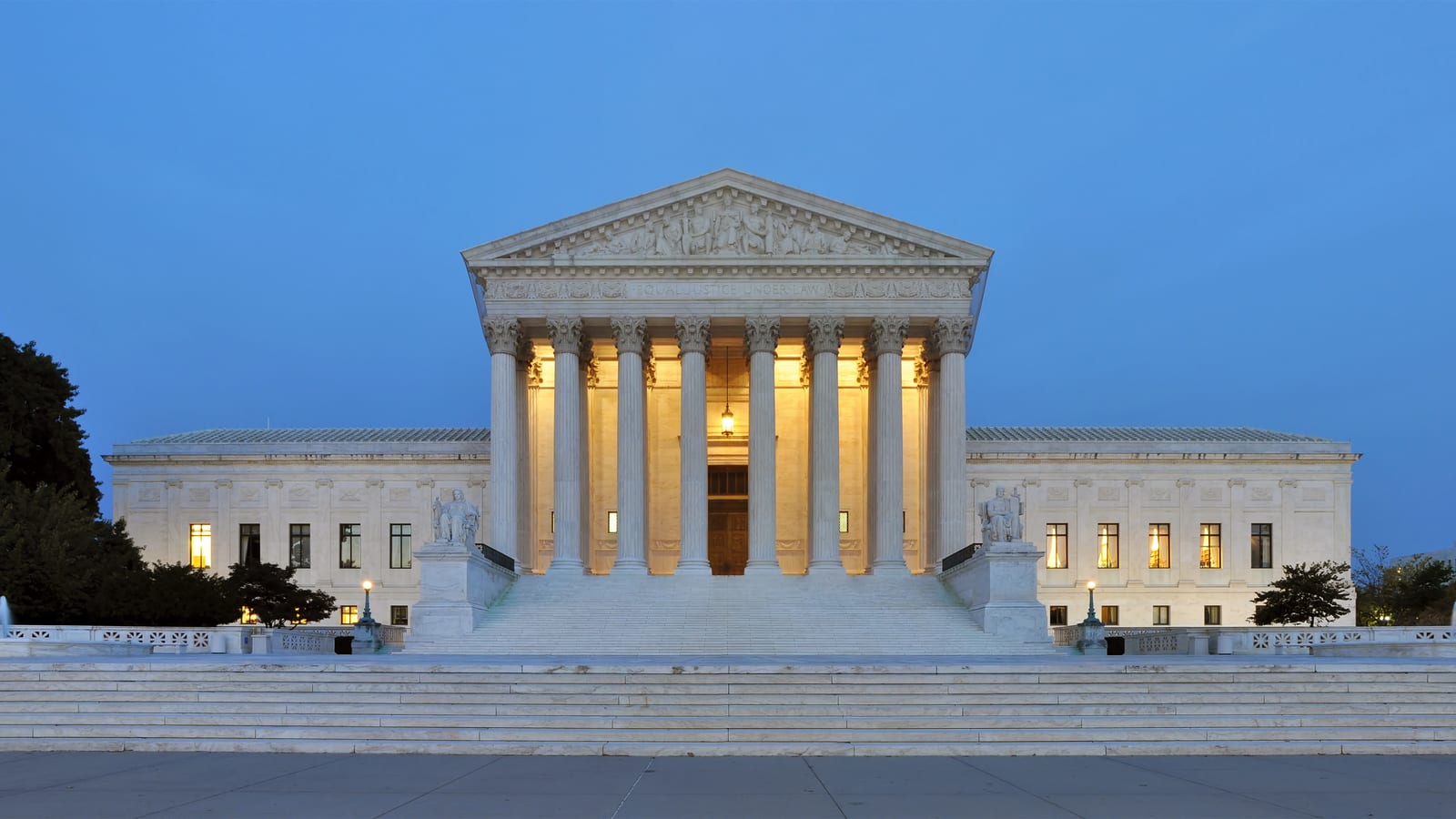
Thirty-nine states, the District of Columbia, the National Football League and the senator whose name is on the Dodd-Frank Act have asked the U.S. Supreme Court to take the New Jersey Kalshi case, in a run of friend-of-the-court briefs that reached docket No. 26-299 between October 6 and October 9, 2026. Five arrived on October 8, 2026 alone: from the NFL, from 145 Indian tribes and tribal organizations, from former Senator Christopher J. Dodd of Connecticut, from former Commodity Futures Trading Commission Chairman Gary Gensler and from the American Gaming Association. The Casino Association of New Jersey, which speaks for the Atlantic City casino industry, added its brief on October 9.
Counting a brief from the National Council of Legislators from Gaming States filed on September 22 and one from the International Association of Gaming Regulators and the North American Gaming Regulators Association filed on October 2, the Court's docket now lists eleven amicus briefs, and every one of their covers reads "in support of petitioners." The petitioners are Mary Jo Flaherty, interim director of the New Jersey Division of Gaming Enforcement, and Jennifer Davenport, the Attorney General of New Jersey, who asked the justices on September 2, 2026 to review the Third Circuit's April 6, 2026 decision affirming a preliminary injunction for KalshiEX, LLC against the state's gaming regulators. This is New Jersey's case in every sense a reader here would care about: a state agency and the state's chief lawyer are the ones asking, and the contracts in dispute are offered to people in New Jersey.
The petition puts one question to the Court: "Whether the 2010 Dodd-Frank Wall Street Reform and Consumer Protection Act preempted States from regulating sports bets that occur within their jurisdictions if those bets are offered on markets registered with the Commodity Futures Trading Commission." The briefs filed between October 6 and October 9 are, in effect, outsiders telling the justices that the question is big enough, and the lower courts divided enough, to be worth an answer now.
Why every brief so far is on New Jersey's side
The one-sided docket is partly a matter of the calendar. Under Rule 37.2 of the Court's rules, a brief supporting a petitioner is due within 30 days after the case is placed on the docket, and "that time will not be extended." New Jersey's petition was docketed on September 8, 2026, which put that deadline at October 8 and explains the crowd of filings that day. A brief supporting the other side follows a different clock: it is due "within the time allowed for filing a brief in opposition." The Court granted an extension on September 22 that moved Kalshi's response from October 8 to November 9, 2026, so anyone who wants to tell the justices that Kalshi is right has until then.
That matters for how to read the filings. Eleven briefs for New Jersey and none for Kalshi does not mean nobody supports Kalshi's reading of the law; it means the side that files first has filed. Kalshi's lawyers are already on the docket: Neal Kumar Katyal of Milbank LLP is counsel of record for the company.
What the states told the Court
The largest single filing came from Ohio Attorney General D. Andrew Wilson, whose office signed for Ohio, 38 other states and the District of Columbia. The signature pages run from Alabama to Wyoming and include Rob Bonta of California, Letitia James of New York, David W. Sunday Jr. of Pennsylvania, Aaron Ford of Nevada and Derek E. Brown of Utah, a state the brief notes prohibits sports gambling. Their opening line sets the tone: "Federal and state courts are hopelessly confused and divided over an issue of immense importance."
The states' brief walks through that division in detail. The Third Circuit, in New Jersey's case, held that Kalshi's sports contracts are "swaps" under federal law and that the Commodity Exchange Act pushes state gambling law aside, over a dissent from Judge Roth. On August 28, 2026, a unanimous Ninth Circuit panel in KalshiEX v. Assad reached the opposite result by a different route: it read the act's exclusive-jurisdiction clause as preempting state law but held that sports bets are not swaps at all. On September 25, 2026, a unanimous Sixth Circuit panel in KalshiEX v. Schuler agreed that the contracts are not swaps and went further, holding that the exclusive-jurisdiction clause supplies no express, field or conflict preemption. Three appeals courts, three different chains of reasoning, two different outcomes: that is the split New Jersey's petition asks the Court to resolve, and the states told the justices that "only this Court can turn this national disorder back on the orderly path."
Dodd and Gensler on what Congress meant in 2010
The two briefs with the most direct claim on the statute came from men who wrote and enforced it. Dodd chaired the Senate Banking Committee from 2007 to 2011 and, in his brief's words, introduced the legislation in 2009 that became the Dodd-Frank Act; the brief says he is "the Senator who sponsored the legislation." His argument is that the law the Third Circuit read as federalizing sports betting was aimed at something else entirely: "Congress did not set out to authorize nationwide sports betting through derivatives markets or displace decades of state and tribal primacy over gaming regulation." On the narrow statutory point, the brief says the payout of a bet cannot be the "financial, economic, or commercial consequence" the swap definition requires, "otherwise, every bet would become a swap because money changes hands."
Gensler, who led the CFTC from 2009 to 2014 and says the agency adopted 67 rules, orders and guidance documents implementing Dodd-Frank under him, made the same case from the regulator's side. His brief says "Congress did not transfer jurisdiction over sports betting from the States to the CFTC," an answer it offers as that of "someone who was there," and adds that the Senate majority leader of the time, Harry Reid of Nevada, "would never have consented" to legislation that moved sports betting under federal control.
The league, the tribes and Atlantic City
The NFL's brief rests on game integrity and on scale. It says that on the first Sunday of the current season, $1.8 billion of the $3.3 billion traded across prediction markets was tied to NFL games, and that the exchanges offering those contracts are "not subject to the same rigorous regulatory constructs and oversight provided by state gaming authorities." The league's point is practical: it says the protections it built with state regulators and licensed sportsbooks after the 2018 Murphy decision, from bans on manipulable bets to monitoring for trading on inside information, are the framework the Third Circuit's reading puts outside state reach.
The tribal briefs raise a second sovereign. The joint brief from 130 federally recognized tribes and 15 tribal organizations says the Third Circuit's reading threatens a right federal law gives tribes to conduct and regulate gaming on their lands, and notes more than 30 related actions pending in lower courts. The Cabazon Band of Cahuilla Indians, the California tribe whose 1987 Supreme Court case, its brief says, prompted Congress to pass the Indian Gaming Regulatory Act the next year, filed separately on October 6; it told the Court that it has made mobile sports betting illegal on its reservation and that Kalshi offers it there anyway.
Closest to home, the Casino Association of New Jersey reminded the justices that the "Murphy" in Murphy v. NCAA, the 2018 decision that struck down the federal sports-betting ban, was New Jersey's governor at the time, Philip Murphy, and called the Third Circuit's ruling "an unpersuasive outlier." Its brief describes Kalshi's path to national sports contracts as three steps: register with the CFTC as a designated contract market, notify the agency of a new contract, and "wait one business day." The American Gaming Association's brief puts numbers on what the licensed industry says is at stake: $166.94 billion wagered with state-licensed sportsbooks in 2025, producing $3.71 billion in tax revenue for the states, and an argument that the Third Circuit's reading allows sports betting by 18- to 20-year-olds.
What the briefs do and do not change
None of this decides anything. Amicus briefs are arguments, and the Court's own Rule 37.1 is blunt that a brief adding nothing the parties have not said "burdens the Court." Whether the justices take the case is their call alone, and nothing on the docket as of October 9, 2026 disturbs the Third Circuit's April 6 affirmance of the preliminary injunction for Kalshi against New Jersey's gaming regulators. The breadth of the support is the news. A petition backed by 39 other states and the District of Columbia, two associations of gaming regulators, the American Gaming Association, a professional league, more than 140 tribes and tribal groups, and the Senate sponsor of the statute in question alongside the CFTC chairman who carried it out is a hard petition to describe as a narrow, local dispute, and that breadth, more than any single argument, is what the filings add to New Jersey's own.
For New Jersey readers following the site's own coverage, the earlier deadline story on the November 9 response date explains how the case reached the Court, and the site's legal page and its Kalshi page cover the exchange's legal standing in the state.
What happens next
The next dated step belongs to Kalshi. Its brief in opposition is due on November 9, 2026, and any brief supporting it is due the same day under Rule 37.2. After a brief in opposition is filed, Rule 15.5 says the Clerk distributes the petition, the opposition and any reply to the justices "no less than 14 days after the brief in opposition is filed," unless New Jersey waives that wait. If Kalshi files on November 9, the petition cannot go to the justices before November 23, 2026, and the decision on whether to hear the New Jersey Kalshi case comes only after that.
Questions readers are asking
Who filed briefs supporting New Jersey in the Kalshi Supreme Court case?
As of October 9, 2026, eleven amicus briefs on docket No. 26-299 support New Jersey, including Ohio for 39 states and the District of Columbia, the NFL, 145 tribes and tribal organizations, Christopher Dodd, Gary Gensler, the American Gaming Association and the Casino Association of New Jersey.
Why has no one filed a brief supporting Kalshi yet?
Under Supreme Court Rule 37.2, a brief supporting the respondent is due within the time allowed for the brief in opposition, and Kalshi's response is due November 9, 2026 after an extension the Court granted on September 22.
What is New Jersey asking the Supreme Court to decide?
Whether the 2010 Dodd-Frank Act preempted states from regulating sports bets made within their borders on markets registered with the Commodity Futures Trading Commission, the question in the petition filed September 2, 2026 by the Division of Gaming Enforcement and Attorney General Jennifer Davenport.
When will the Supreme Court decide whether to hear New Jersey v. Kalshi?
Not before late November 2026. Kalshi's response is due November 9, and Rule 15.5 holds the petition for at least 14 days after a response is filed before it goes to the justices, unless New Jersey waives the wait.