StoryLocal news
Kalshi Hired the Lawyer Who Argued Against New Jersey in 2017 and Moved Its Supreme Court Answer to December 7
The Court granted Kalshi's unopposed request on October 30, 2026, moving its answer from November 9 to December 7, which leaves no conference for the justices to take up New Jersey's petition before January 8, 2027 unless one side speeds the schedule.
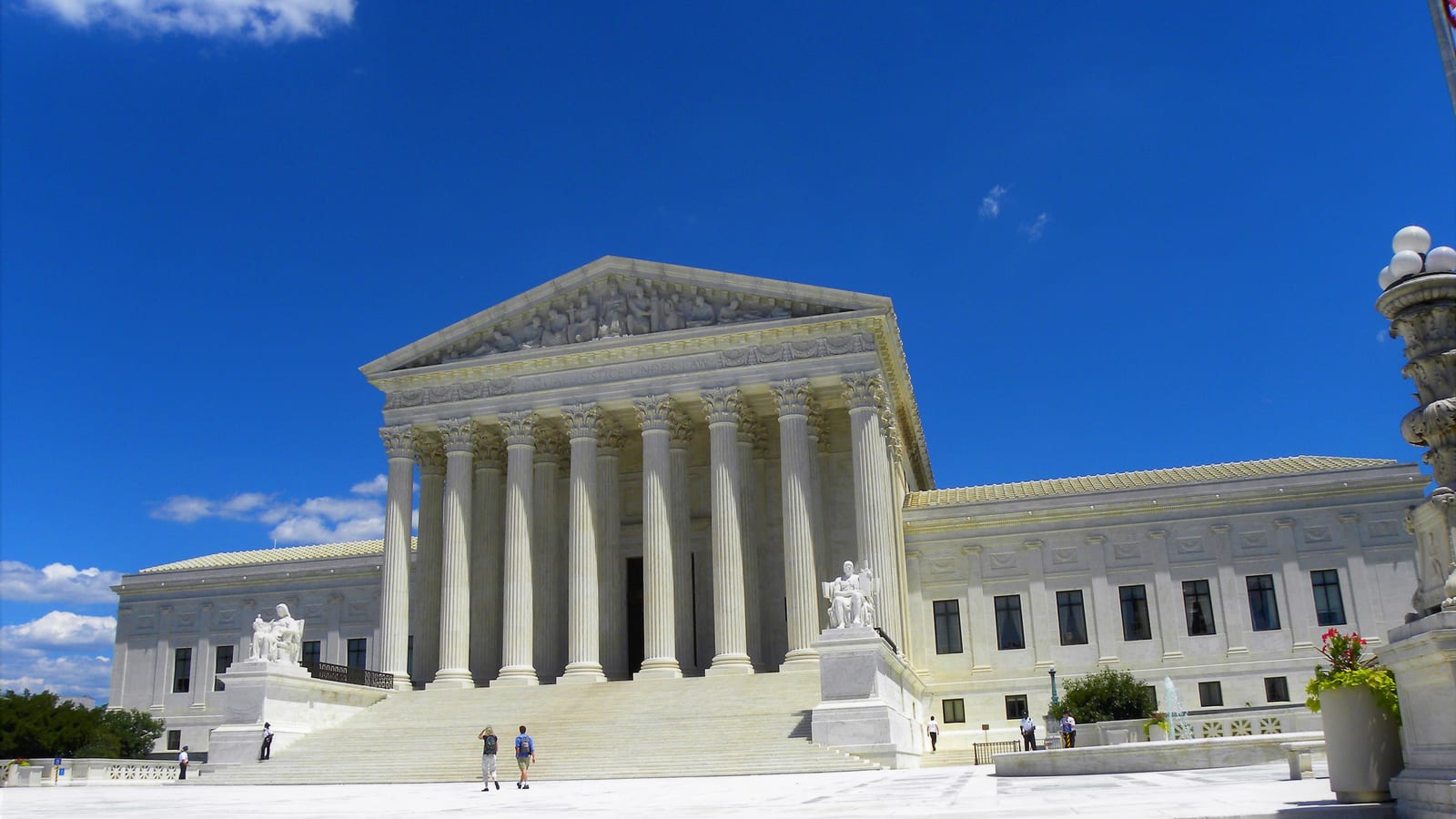
Kalshi now has until December 7, 2026 to answer New Jersey at the Supreme Court, four weeks later than the November 9 deadline it faced when this story first ran on September 28, 2026, and the lawyer who asked for the extra time is Paul D. Clement, who argued against New Jersey in the Court's last sports-betting case. Clement wrote to the Clerk on October 29, 2026 asking for 28 more days in Flaherty v. KalshiEX, LLC, No. 26-299, the New Jersey Kalshi Supreme Court case, and the docket records the motion granted on October 30, with the time "further extended to and including December 7, 2026."
The petitioners, as the docket names them, are Mary Jo Flaherty, interim director of the New Jersey Division of Gaming Enforcement, and Jennifer Davenport, the state's attorney general, both in their official capacities. They asked the justices on September 2, 2026 to review the Third Circuit's April 6, 2026 decision affirming a preliminary injunction that bars the Division from enforcing New Jersey's sports-wagering law against Kalshi's contracts. It is New Jersey's own case in every respect that matters to a reader here: the state's regulator and its chief lawyer are the ones asking, and the contracts at issue are offered to people in New Jersey.
Updated November 3, 2026 with the October 29 extension request, the October 30 order moving the response to December 7, Kalshi's new counsel of record and the district court's stay. The story first ran on September 28, 2026, when the response was due November 9.
What Kalshi asked for, and why
The request is a one-page letter, which is the form Rule 30.4 of the Court's rules allows for a motion to extend time on a document like a brief in opposition: a letter to the Clerk "setting out specific reasons why an extension of time is justified." Clement's letter opens, "I represent Respondent KalshiEX LLC in the above-referenced case," recites that Kalshi received its first extension on September 22, 2026, and asks for "an additional 28-day extension of time, up to and including December 7, 2026." One sentence in it matters more than the rest for a New Jersey reader: "Petitioners do not oppose this request." The state did not fight the delay.
The reason given is the lawyer's own calendar. The letter lists eight commitments between its date and December 7, among them oral arguments in the Fourth Circuit on October 30 and the Fifth Circuit on November 2, December 1 and December 2, and briefs due in the Sixth, Seventh, Eighth and Eleventh Circuits. The docket entry for October 30, 2026 reads, in full, "Motion to extend the time to file a response is granted and the time is further extended to and including December 7, 2026."
This is the second time the response date has moved. The petition was docketed on September 8, 2026 with a response due October 8; a first motion moved that to November 9 on September 22; the October 30 order moves it again. Before the petition was filed, Justice Alito twice extended New Jersey's own deadline to file it, on July 1, 2026 to August 4 and on July 24 to September 3. Both sides have now taken extra time at the Court.
Who is answering for Kalshi now
The docket's list of attorneys, as of November 3, 2026, names Clement of Clement & Murphy, PLLC, in Alexandria, Virginia, as counsel of record for KalshiEX, LLC, with Neal Kumar Katyal of Milbank LLP still listed for the company. On the docket as it stood on October 9, 2026, Katyal was the company's counsel of record and Clement did not appear. The Justice Department's historical biography of Clement records that he was the 43rd Solicitor General of the United States, from 2005 to 2008, after his confirmation by the Senate on June 8, 2005.
His history with New Jersey is on the Court's own record. The official transcript of the December 4, 2017 argument in Christie v. National Collegiate Athletic Association, No. 16-476, in which New Jersey's then-governor, Christopher J. Christie, was the lead petitioner, lists "PAUL D. CLEMENT, Washington, D.C.; on behalf of the Respondents," the NCAA and its co-respondents, on the other side from the state. The Court decided the case on May 14, 2018 as Murphy v. National Collegiate Athletic Assn., 584 U.S. 453, holding that the provisions of the federal Professional and Amateur Sports Protection Act that barred states from authorizing sports gambling violate the Constitution's anticommandeering rule. Clement now represents the company arguing that federal commodities law preempts New Jersey's sports-wagering law.
The question New Jersey put to the Court
The petition states its question in one sentence: "Whether the 2010 Dodd-Frank Wall Street Reform and Consumer Protection Act preempted States from regulating sports bets that occur within their jurisdictions if those bets are offered on markets registered with the Commodity Futures Trading Commission." The rest of the brief argues that the answer should be no and that the Court should say so now.
The petition's account of how the case arose is the record a reader can check. Kalshi, which operates an exchange registered with the CFTC as a designated contract market, began offering contracts on sports outcomes in January 2025. The Division sent Kalshi a cease-and-desist letter in 2025 stating that those contracts violated the Sports Wagering Act, N.J. Stat. Ann. section 5:12A-11, "which only permits licensed entities to offer sports wagering to patrons located in New Jersey." Kalshi sued in the District of New Jersey, arguing that the Commodity Exchange Act, as amended by Dodd-Frank, preempts the state law. Judge Edward S. Kiel, in No. 1:25-cv-02152, granted a preliminary injunction on April 28, 2025, and the state appealed.
What the Third Circuit decided
The Third Circuit heard argument on September 10, 2025 and decided the appeal on April 6, 2026 in a precedential opinion by Judge Porter joined by Chief Judge Chagares, with Judge Roth dissenting. The majority's holding is in its opening paragraph: "Because Kalshi has demonstrated a reasonable chance of success on its argument that the Commodity Exchange Act preempts otherwise applicable state law, we will affirm." The mandate issued on April 28, 2026.
Two features of that ruling explain why the state went to Washington. It treats a sports event contract on a CFTC-registered exchange as a "swap" under the Act, the premise its preemption holding rests on. And it is a ruling on a preliminary injunction, not a final judgment. The petition's first reason for review is that the question "has generated a direct and acknowledged split," pointing to the Ninth Circuit's August 28, 2026 opinion in Kalshi's Nevada case, which disagreed with the Third Circuit's reasoning. Whether the split is real enough, or the question important enough, is for the Court, and this page draws no conclusion on it.
What stays in force while the petition waits
The order that governs New Jersey today is the preliminary injunction the Third Circuit affirmed. Nothing on the Supreme Court's docket as of November 3, 2026 changes it, and the December 7 extension does not touch it. The extension changes when the Court hears from Kalshi, not what the lower courts have ordered.
The trial court is also on hold. On May 19, 2026, Judge Kiel signed a joint status report from both sides, Document 41 in No. 1:25-cv-02152, in which Kalshi and the state asked him to "continue to stay proceedings pending any decision by the U.S. Supreme Court to grant or deny certiorari and, should certiorari be granted, pending the Supreme Court's final disposition of the case." The order adds that the parties will file another joint status report within 21 days after a denial or a final decision. So no court is moving the merits of New Jersey's case while the petition is pending, and the longer the petition waits, the longer that remains true.
That is an answer about what has been ordered, not about what is lawful. The Division has been enjoined from enforcing the Sports Wagering Act against Kalshi's contracts since April 28, 2025, the injunction survived appeal, and the state's request that the Supreme Court undo it has not been answered.
Who has filed so far
Every friend-of-the-court brief on the docket supports New Jersey. Eleven were filed between September 22 and October 8, 2026, from 39 states and the District of Columbia, the NFL, 145 tribes and tribal organizations, former Senator Christopher Dodd, former CFTC Chairman Gary Gensler, the American Gaming Association and the Casino Association of New Jersey among them; the site's story on those briefs covers what each argued. The imbalance is partly the calendar. Under Rule 37.2, a brief supporting a respondent is due "within the time allowed for filing a brief in opposition," so the October 30 order gives anyone who wants to support Kalshi until December 7 as well.
The calendar the docket now sets
The next date in New Jersey's Kalshi case is December 7, 2026, when Kalshi's brief in opposition is due. Under Rule 15.5, once a brief in opposition is filed, the Clerk distributes the petition, the opposition and any reply to the justices "no less than 14 days after the brief in opposition is filed, unless the petitioner expressly waives the 14-day waiting period." If Kalshi files on December 7 and New Jersey keeps the waiting period, the papers cannot go to the justices before December 21, 2026.
The Court's published calendar for its October 2026 term shows conference days on December 4 and December 11, 2026 and none again until January 8, 2027. On that schedule, the earliest conference that could take up New Jersey's petition is January 8, 2027, unless Kalshi files early or New Jersey waives the wait. The status of every venue this site quotes is kept on the New Jersey legal status page, and the Kalshi page carries the exchange's own record in the state.
Questions readers are asking
Has the Supreme Court agreed to hear New Jersey's Kalshi case?
No. As of November 3, 2026 the docket in No. 26-299 shows the petition filed September 2, two extensions of Kalshi's response deadline and eleven amicus briefs supporting New Jersey, but no order granting or denying review.
Why was Kalshi's Supreme Court deadline moved to December 7?
Paul D. Clement, Kalshi's counsel of record, asked for 28 more days in an October 29, 2026 letter citing his other argument and briefing commitments, New Jersey did not oppose, and the Court granted the request on October 30.
Who represents Kalshi at the Supreme Court in the New Jersey case?
Paul D. Clement of Clement & Murphy, PLLC is counsel of record as of November 3, 2026, with Neal Kumar Katyal of Milbank LLP also listed; Clement argued for the respondents against New Jersey's governor in the 2017 sports-betting case the Court decided in 2018 as Murphy v. NCAA.
Can New Jersey enforce its sports-wagering law against Kalshi while the petition is pending?
No. The preliminary injunction Judge Edward S. Kiel granted on April 28, 2025, affirmed by the Third Circuit on April 6, 2026, bars the Division of Gaming Enforcement from enforcing the Sports Wagering Act against Kalshi's contracts, and the district court stayed the case on May 19, 2026 until the Supreme Court acts.
When could the justices take up New Jersey's petition against Kalshi?
Not before January 8, 2027 if Kalshi files on December 7 and New Jersey keeps the 14-day wait under Rule 15.5, because the Court's calendar lists conferences on December 4 and December 11, 2026 and none again until January 8.