StoryLocal news
Van Drew and Mullock Clashed at Stockton as the Shore Seat's Price Climbed Back to Its Early-October Level
An upset by the challenger went from 16% at Polymarket on October 16 to 19% on October 23, 2026, so a debate week in which he also outraised the incumbent undid the slide that followed the target listing.
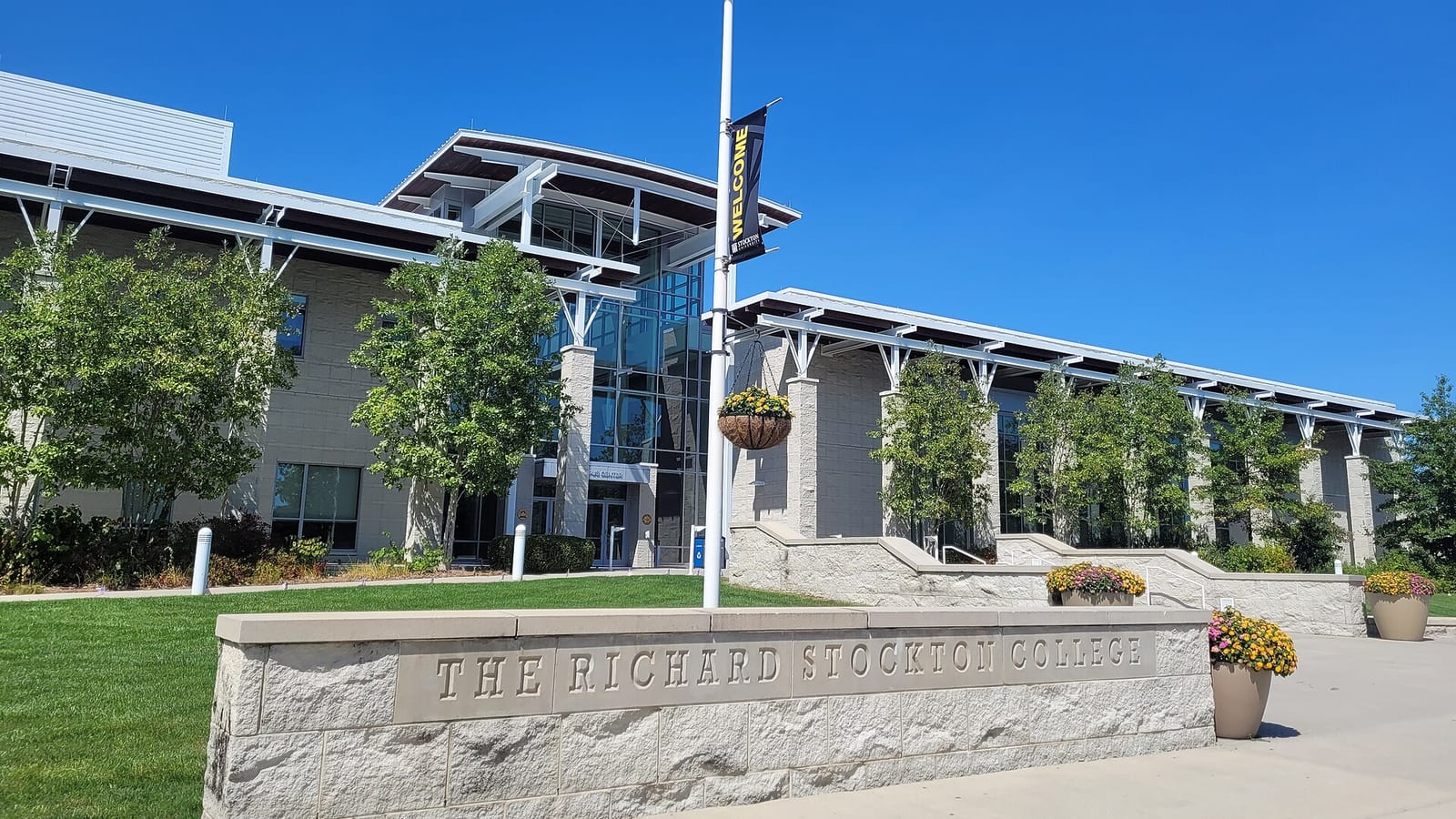
Rep. Jeff Van Drew and Zack Mullock met in their debate for New Jersey's 2nd District on the evening of October 22, 2026, at Stockton University's Campus Center in Galloway Township, hours after both campaigns filed pre-general reports showing Mullock had raised more than Van Drew in the first two weeks of October. The one-hour debate, co-sponsored by the university's William J. Hughes Center for Public Policy and The Press of Atlantic City, had no audience in the room and was streamed online, InsiderNJ reported; 6abc reported that moderators repeatedly stepped in to halt heated exchanges.
The Van Drew Mullock debate closed a week in which the market for the seat moved toward the challenger. As of 1:51 pm on October 23, 2026, Polymarket priced a Democratic win of the 2nd District at 19% and Kalshi at 21%, while both venues had a Republican hold at 80%. Polymarket's Democratic price rose from 16% on October 16 to 19% on October 23, which means the board is back at the level it held on October 9, before a week-long slide that followed the national party's decision to list the seat as a target.
What the October reports show
Mullock's committee reported 136,862 dollars in contributions between October 1 and October 14, 132,112 dollars of it from individual donors and 4,750 dollars from political action committees, according to the pre-general report Mullock for Congress filed with the Federal Election Commission on October 22. That is more than a third of the 361,093 dollars he raised across the whole of July, August and September, in two weeks. He spent 148,705 dollars, so his balance slipped from 117,243 dollars to 105,400 dollars, and the committee still lists 110,000 dollars in debts, the money Mullock lent his own campaign.
Van Drew's report shows a smaller haul and a larger bill. His committee reported 76,098 dollars in contributions for the same two weeks, 43,098 dollars from individuals and 33,000 dollars from political action committees, plus 3,034 dollars in transfers. It spent 341,702 dollars on operations and 374,381 dollars in all, and its cash on hand fell from 1,190,040 dollars on September 30 to 894,792 dollars on October 14. The committee reported no debts.
Set side by side, the reports move both numbers this site tracked in the October 16 story on the third-quarter filings. That story said the read would change if Mullock's October receipts ran well ahead of his summer pace. They did: he raised almost twice what Van Drew raised over the two weeks. But the cash gap barely closed in proportion. Van Drew entered the last three weeks with about 8.5 dollars for every one in Mullock's account, down from about ten to one on September 30, and Mullock's total is still less than a third of what Van Drew spent in the same fourteen days.
What the candidates said at Stockton
The debate covered affordability, gas prices, immigration, data centers and the war in Iran, with questions developed with public input, according to 6abc. Mullock opened on the incumbent's ties to the president. He called his candidacy a return to "normalcy and decency," cited Van Drew's support for data centers, the war in Iran and what he described as doubling health insurance costs, and said the congressman's support for President Donald J. Trump came at the district's expense, InsiderNJ reported. He tied tariffs to grocery costs and the war to gas prices, and said farmers in Cumberland and Salem counties were struggling because of policies Van Drew voted for.
Van Drew answered on energy and on what he called his connection to the district. He said the country had not built the refineries it needs and should no longer depend on the Middle East, 6abc reported, and he objected to Mullock's description of his votes on Iran, saying he had voted "not to abandon our troops." He disputed Mullock's account of the health care cuts in the bill Mullock attacked, arguing they targeted healthy people rather than vulnerable ones, and called his opponent "Mr. Pinocchio." In closing, Van Drew said Democratic socialists, "which my opponent represents," would change the structure of the country; Mullock asked voters whether they were better off than two years ago.
Nothing in the coverage points to a moment that ended the race in either direction. Both reports describe a sharp exchange between a challenger who needed attention and an incumbent who defended his votes, which is the shape the market had already been pricing.
How the NJ-2 board read the week
The price path runs one way since October 16. Polymarket had a Democratic win at 16% and Kalshi at 18% at 11:22 pm on October 16. By 2:29 pm on October 19, Polymarket was at 17% and Kalshi at 19%. At 1:51 pm on October 23, the morning after the debate and the filings, Polymarket was at 19% and Kalshi at 21%, and the Republican side had fallen from 84% on both venues to 80%. The cheapest Democratic Yes rose three points in a week, which means the board has given back the slide that ran from 19% on October 9 to 16% on October 16, though not more than that.
Trading picked up as it moved. Kalshi recorded about 38,300 contracts on the seat in the 24 hours before 1:51 pm on October 23, roughly a third of the 118,600 contracts it had traded on the race in total, while Polymarket's pools held $28.4K on the Democratic side and $27.8K on the Republican side.
At 19%, a Democratic win is priced at a little under one chance in five. That is still a firm Republican read: the market treats Van Drew as a heavy favorite in a district he won by 19 points in 2022 and 17 in 2024, according to The Philadelphia Inquirer. What the week changed is the direction. A challenger who outraises the incumbent in October, gets a televised debate in which he was on the attack, and sees the board rise afterward is no longer being priced lower with every read, as he was after the national party's listing.
The case against reading the move as momentum
The strongest counterargument is the money in the bank. Mullock's 105,400 dollars has to cover the final three weeks of a race in which Van Drew still holds 894,792 dollars, and a three-point move that only returns the price to its October 9 level is a correction, not a trend. The Democratic Congressional Campaign Committee added the district to its Districts in Play list on October 2 and, as of the New Jersey Globe's October 16 report, had not announced spending there; and a 17-point margin from two years ago is a long way to close with an eighth of the incumbent's cash.
What would prove the move real is dated and visible. If national Democratic money arrives on the air in the district before November 3, or if the board holds near 19% through the early-voting period, the week of October 16 will have been the low point. If the price drifts back toward 16% once early voting opens, the debate and the October filings will have been noise.
What comes next in NJ-2
In-person early voting opens on Saturday, October 24 and runs through November 1, 2026, according to the New Jersey Division of Elections, and Election Day is November 3. The official ballot lists Van Drew, the Republican incumbent, Mullock, the Democratic nominee, and Ramon Mora Jr., an independent from Vineland. The next full campaign finance reports, covering October 15 through November 23, are due December 3, 2026. The district's results and the contract's terms are on the New Jersey 2nd District market page, and every race in the state is on the elections page.
Questions readers are asking
When was the Van Drew Mullock debate?
Jeff Van Drew and Zack Mullock debated on October 22, 2026, from 6 to 7 pm at Stockton University's Campus Center in Galloway Township, in a debate co-sponsored by the Hughes Center and The Press of Atlantic City and streamed online.
How much did Van Drew and Mullock raise in early October?
Mullock's committee reported 136,862 dollars in contributions and Van Drew's 76,098 dollars between October 1 and October 14, 2026, according to the pre-general reports both filed with the Federal Election Commission on October 22.
How much cash do Van Drew and Mullock have left?
Van Drew's committee reported 894,792 dollars on hand at October 14, 2026, and Mullock's reported 105,400 dollars, with a 110,000 dollar debt for money Mullock lent his campaign.
What are the odds Mullock beats Van Drew?
As of October 23, 2026, Polymarket priced a Democratic win of the 2nd District at 19% and Kalshi at 21%, up from 16% and 18% on October 16, while both venues had a Republican hold at 80%.
When does early voting start in New Jersey's 2nd District?
In-person early voting runs from October 24 through November 1, 2026 at county-designated sites, and Election Day is November 3, 2026, according to the New Jersey Division of Elections.