StoryLocal news
Mullock Nearly Matched Van Drew's Summer Fundraising and Enters October With a Tenth of His Cash
Polymarket priced a Democratic win of the 2nd District at 16% on October 16, 2026, down from 19% on October 9, which means the national party's listing and a near-even quarter have not pulled the board toward Mullock.
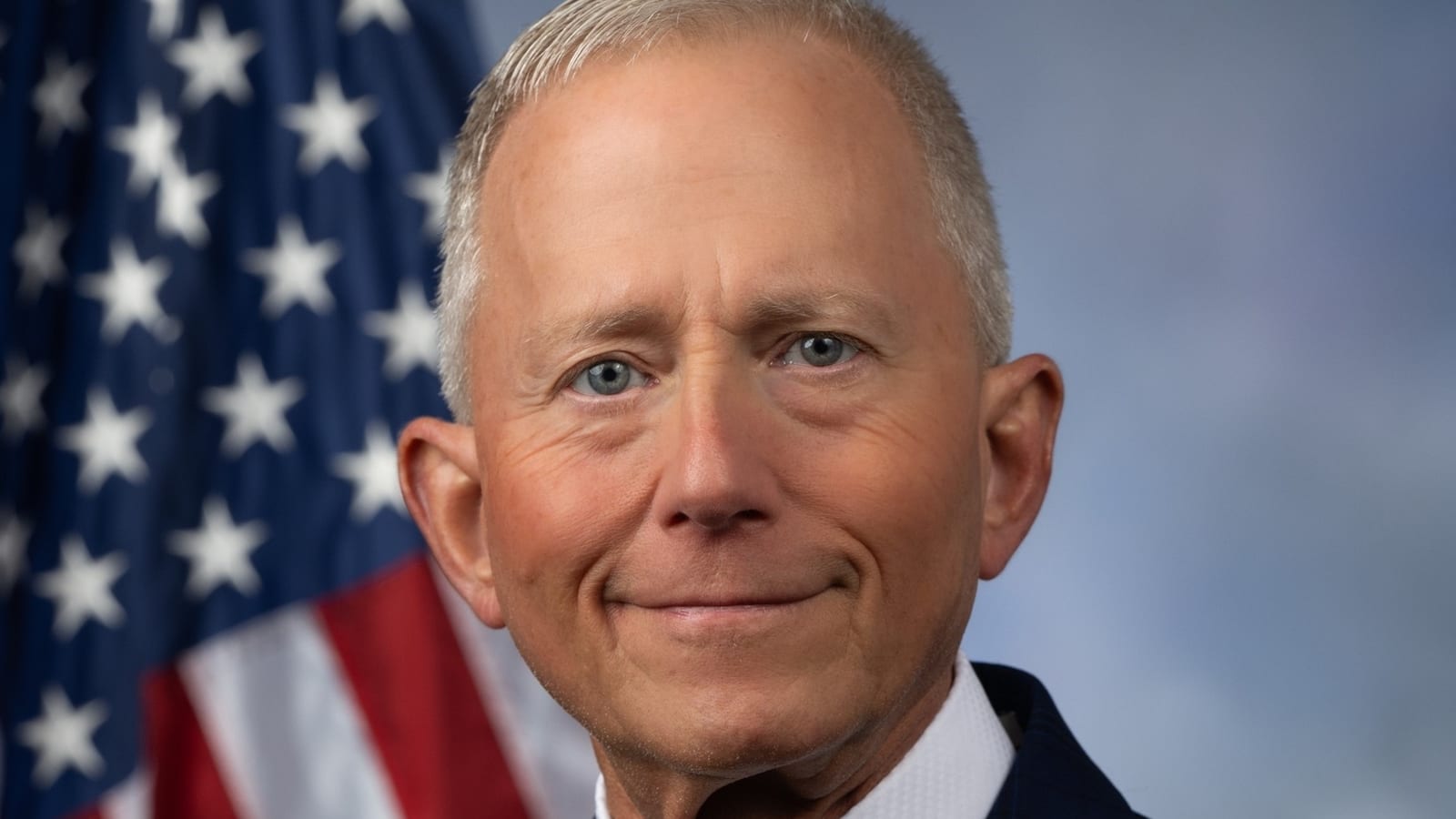
Zack Mullock raised 361,093 dollars between July 1 and September 30, close to the 405,417 dollars Rep. Jeff Van Drew raised over the same months, but he entered October with 117,243 dollars in the bank to Van Drew's 1.19 million, according to the quarterly reports both campaigns filed with the Federal Election Commission on October 15, 2026. The Van Drew Mullock fundraising race in New Jersey's 2nd District is the first one measured since the Democratic Congressional Campaign Committee added the seat to its Districts in Play list on October 2, and it shows a challenger who can now raise money at nearly the incumbent's pace and still has about a tenth of his cash.
As of 11:22 pm on October 16, 2026, Polymarket had a Democratic win of the seat at 16% and Kalshi had it at 18%, while both venues priced a Republican hold at 84%. Polymarket, the cheaper of the two on the Democratic side, had that outcome at 19% on October 9, a week after the national party's announcement, which means the listing and a near-even quarter have been met by a lower price for Mullock, not a higher one. The market is reading the bank balances, not the quarter.
What the October 15 reports show in NJ-2
Van Drew's committee reported 405,417 dollars in receipts for the quarter: 311,884 dollars from individual donors, 89,700 dollars from political action committees and 3,754 dollars in transfers from other authorized committees. It spent 753,418 dollars, nearly twice what it took in, and its cash on hand fell from 1.54 million dollars on July 1 to 1.19 million on September 30. Across the cycle the committee has raised 2.39 million dollars and reported no debts. The New Jersey Globe, reading the same filing, noted more than 24,000 dollars from transportation-industry PACs during the quarter for a member of the House Transportation Committee, including 5,000 dollars from the Allied Pilots Association.
Mullock's quarter was the best of his campaign. His committee reported 361,093 dollars in receipts, of which 320,493 dollars came from individuals, 39,700 dollars from PACs and 900 dollars from party committees; the Globe reported 5,000 dollars apiece from the PACs of UNITE HERE and the International Association of Sheet Metal Workers. He spent 363,271 dollars, almost exactly what he raised, so his balance barely moved, from 119,421 dollars at the start of July to 117,243 dollars at the end of September. His cycle total is 824,086 dollars, and that figure includes 110,000 dollars he lent the campaign himself; the report lists the same 110,000 dollars as a debt the committee owes.
Set side by side, the two reports describe a challenger whose fundraising has caught up and an incumbent whose bank account has not had to. Mullock raised about nine dollars for every ten Van Drew raised over the summer. Van Drew has about ten dollars on hand for every one of Mullock's. Three weeks before an election, the second ratio is the one that buys airtime.
What the DCCC listing does and does not bring
The national party's October 2 release added New Jersey's 2nd District to its Districts in Play, which it describes as competitive districts held by vulnerable Republicans that will decide the House majority. Its chair, Suzan DelBene, said in the release that voters would send Van Drew "packing next month," and the release argued that the party's 2025 nominee for governor came within single digits in the district. The Philadelphia Inquirer reported that day that the designation signals staff support rather than the money that goes with the committee's more competitive "Red to Blue" tier, and that the 7th District, Tom Kean Jr.'s seat, remained the only New Jersey race on that list. Mullock told the Inquirer he learned of the listing through social media, at the same time as everyone else.
Van Drew's campaign answered with dismissal. His spokesman, Ron Filan, told the Inquirer that Democrats make the race look competitive every cycle as a "fundraising ploy" and that the committee "has about a third of House Republicans on one of their silly wish lists or another." The Globe reported on October 16 that the committee had yet to announce any spending on the race, two weeks after the listing.
The money the national party could add is on a deadline. The Associated Press reported on October 13, 2026 that the committee launched a 17 million dollar fundraising drive, closing October 22, to put advertising on the air in districts once seen as out of reach, and named an Ohio seat and three metro areas where it would start spending if it reached the goal. New Jersey's 2nd District was not among the places the AP named.
How the NJ-2 board read the two weeks
The prices since the listing run one way. At 5:54 pm on October 9, 2026, Polymarket had a Democratic win at 19% and Kalshi at 21%, with a Republican hold at 80% on Polymarket and 82% on Kalshi. At 5:07 pm on October 12, the Democratic side was 17% on Polymarket and 19% on Kalshi. By 11:22 pm on October 16, it was 16% and 18%, and both venues had the Republican side at 84%. The cheapest Democratic Yes went from 19% on October 9 to 16% on October 16, three points over a week whose main district news was the filings, which means each read since the listing has priced Mullock lower than the one before it.
That direction is the board's answer to the quarter. A three-point drop is small, but it says the market weighed Mullock's near-match in receipts less than his near-empty account, and that a listing without money attached did not change what the venues think the last three weeks will look like. At 16%, the Democratic side is priced as roughly a one-in-six outcome, which is the board saying the listing has not yet turned into a race it expects to be close.
The case for Mullock the reports leave open
The other read is not a strawman. A challenger who raised nearly as much as an incumbent first elected in 2018, in the quarter before an election, has shown he can raise money, and money raised in October is spent in October; the reports filed on October 15 stop at September 30. Mullock also decisively won a crowded June primary, the Inquirer reported, and Van Drew's own spending, 753,418 dollars in the quarter, including attack ads the Inquirer said were aimed at the Cape May mayor, suggests a campaign that is not treating the race as finished. Against that sits the record: Van Drew won by 19 points in 2022 and 17 points in 2024, by the Inquirer's count.
What would change the read is dated and public. If the pre-general reports show Mullock's receipts for the first two weeks of October running well ahead of his summer pace, or if the national party announces advertising in the district before its October 22 deadline, the cash gap narrows in the weeks that count and a 16% price leaves room to rise. If neither happens, the board's read will have been the right one.
What comes next in NJ-2
The pre-general reports, covering October 1 through October 14, are due to the Federal Election Commission on October 22, 2026, the same day the national party's fundraising drive closes. In-person early voting opens on October 24 and runs through November 1, according to the Division of Elections, and Election Day is November 3, 2026. The official ballot lists Van Drew, the Republican incumbent, Mullock, the Democratic nominee, and Ramon Mora Jr., an independent from Vineland. The live prices, the district's results and the contract's terms are on the New Jersey 2nd District market page, and the fundraising race next door is in the NJ-7 story on Kean's cash and the super PAC exit.
Questions readers are asking
How much did Jeff Van Drew and Zack Mullock raise in the third quarter?
Van Drew raised 405,417 dollars and Mullock raised 361,093 dollars between July 1 and September 30, 2026, according to the October quarterly reports both campaigns filed with the Federal Election Commission on October 15, 2026.
How much cash do Van Drew and Mullock have for the final weeks?
Van Drew's committee reported 1.19 million dollars on hand at September 30, 2026, and Mullock's reported 117,243 dollars, along with a 110,000 dollar debt for money Mullock lent his own campaign.
Is NJ-2 a DCCC target?
Yes. The Democratic Congressional Campaign Committee added New Jersey's 2nd District to its Districts in Play list on October 2, 2026, though the New Jersey Globe reported on October 16 that the committee had not yet announced any spending on the race.
What are the odds Mullock beats Van Drew?
As of October 16, 2026, Polymarket priced a Democratic win of the 2nd District at 16% and Kalshi at 18%, while both venues had a Republican hold at 84%.
When is the next NJ-2 fundraising report due?
The pre-general reports covering October 1 through October 14 are due to the Federal Election Commission on October 22, 2026, and in-person early voting in New Jersey runs from October 24 to November 1.